

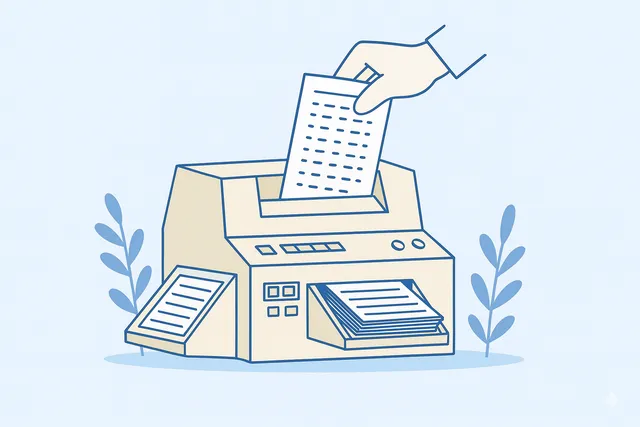
Scoring automation has been around for ages, and it brings to mind Scantron sheets we bubbled with a little nervous energy using No. 2 pencils. Scantron grading worked yet, it hit a brick wall whenever teachers needed to judge essays or presentations with some nuance. Now, though, the grading system is shifting a bit, and newer AI platforms are beginning to do rubric-style feedback that feels more pedagogical than old bubble tests ever did.
Teachers are split on trusting AI grading, because grading isn’t just a score. Some students think AI feels cleaner and almost less personal, while others stick to the idea that only a teacher can read the room and grade fairly. Meanwhile, machine learning keeps reading submissions, usually spotting patterns, flagging confusion, and gently nudging students who might be falling behind.
In the age of AI, tasks that only test recall or rely on one-word answers don’t tell us much about what students can actually do. In order to make students ready for the AI-first world, assessments should build metacognition, creativity, and problem-solving—skills. That’s why institutions are redesigning assessments with these qualities in mind. Edvisor helps you do this with AI that stays aligned with your curriculum and learning outcomes, while also strengthening student learning. And the impact is real: 86% of students said they felt more engaged with course content when studying with Edvisor..
What Is a Scantron?
Scantron is a scannable answer-sheet system, adopted in over 105 countries for testing purposes. It enables educators to build assessments using content from item banks, textbooks, custom questions, and additional resources.
Do Colleges Still Use Scantrons?
Yes, many colleges still use Scantrons. However, their use is gradually decreasing as more institutions shift toward digital assessment platforms.
Scantrons have stuck around despite clear limitations largely because they feel efficient. Teachers just have to put in the answer sheets into a machine which scores them within seconds. However, this workflow is being eclipsed by much faster and simpler solutions like Canvas and Blackboard. They automatically grade multiple-choice items, at no cost and without specialized hardware, paper, or ink. The literature also argues for student-centered models where learners actively engage, collaborate, and receive feedback (MCQs don’t support this kind of learning style). AI grading supports that shift. For instructors, it’s also simpler: instead of trekking to a Scantron machine and running stacks of sheets, results are released automatically from a computer. The process is faster, more convenient, and can be done from anywhere.
Cons of Using Scantrons
Scantron is currently used in 98% of U.S. schools, spans 56 countries, and serves 94 of the top 100 universities. Scantron tests may be quick to grade, but they often create unnecessary stress for students. Tiny bubbles, mis-bubbling risks, and rigid formats work against meaningful understanding. Here are some of the disadvantages of using Scantrons:
- High student anxiety without any insight: The bubble format raises test stress for students as they have to be careful about marking within the circles without a chance to undo it. Scantrons also don't provide any insights about student mastery as it reveals little about reasoning or learning processes.
- Accessibility barriers: Students who have vision or fine-motor challenges can be unfairly disadvantaged in this type of testing.
- Error-prone format: Bubbled sheets have tiny, tightly spaced bubbles which lead to misalignments, faint marks, and misreads.
- Recurring maintenance cost: Scantrons become expensive as forms, ink, and machine maintenance cost a lot. Older scanners misread erasures or fail, undermining score confidence. Some universities are using Gradescope as students aren’t required to buy bubble sheets, so you can print what you need.
- Paper-bound and place-bound: Not suited to hybrid/remote classes, grading depends on physical machines and consumes significant paper.
- Limited analytics for improvement: Minimal built-in item analysis makes it harder to spot patterns, diagnose misconceptions, and adjust instruction quickly.
Better Efficiency and Learning: How AI Grading Wins
When Scantrons arrived, there were fears that it would replace teachers. AI-assisted grading is also facing the same critique. The fact is, both of these methods only augment authentic learning by streamlining repetitive scoring. They can now direct their energy towards richer conversations and provide targeted feedback. Let’s see how AI grading can provide workflow efficiency for teachers and better learning for students.
Beyond Multiple Choice: The Limits of Scantrons
For decades, the multiple-choice question was treated as peak efficiency. Distill a student’s thinking into a single letter, correct or incorrect. Scantrons automated part of this process, but they didn’t improve learning. Some of their limitations are listed below.
- No reasoning visibility: Students receive a score, but no explanation.
- Shallow measurement: Essays, presentations, lab write-ups, and reflection cannot be bubbled in.
- No retention gains: Research found that Scantron users showed no improvement one week later, displaying no evidence of learning retention.
- Manual logistics: Scoring still depends on physical machines, timing access, and paper processing.
Scantrons measure completion, not growth.
Immediate, Actionable Feedback
Processes that once took hours with a red pen can now be completed in seconds. With AI-grading and immediate feedback, students gain instant insight into errors, strengthening understanding before misconceptions solidify.
Immediate feedback matters. In the same study, participants who received feedback using enhanced formats significantly outperformed traditional Scantron users:
- Scantron post-test mean: 8.27
- Scantron with feedback post-test mean: 10.92 (a ~32% improvement)
Over time, feedback users continued improving, while Scantron users did not:
“…scantron users’ results did not change significantly over time.”
And perhaps most compelling: students who received feedback throughout the semester were twice as likely to answer repeated exam items correctly.
AI easily mirrors these feedback benefits, but without scratch-off cards or paper constraints.
The Technology Behind the Advantage
AI grading excels because it can evaluate what Scantrons fundamentally cannot. Through Natural Language Processing (NLP), it understands coherence, reasoning, and content quality in open-response work. There's also individualized suggestions for students to help recognize weak patterns so they can learn from performance history. It produces rubric-aligned explanations and next steps at scale so there is real learning and not just scoring.
Fairness and Consistency
Some institutions put great emphasis on unbiased grading so AI grading helps more than Scantrons do. It reduces the influence of unconscious bias by applying the same standards to every student. Identical responses receive identical evaluations, regardless of handwriting, tone, or the grader’s fatigue.
And just like Scantrons once “rescued” educators from hours of manual grading, AI now moves us beyond what bubble sheets ever offered: actionable feedback, fairness, and lasting learning.
Why Human Oversight Still Matters in AI Grading
AI-assisted grading speeds up the assessment process because when feedback is not delayed, students also learn faster with better mastery. Still, the role of the teacher still exists. Using AI to grade assessments provides teachers more time for higher-value work. So they can focus on designing engaging lessons, and building supportive classroom relationships. Edvisor has helped college professors save 6 hours/week by taking care of repetitive tasks like grading assessments - see how professors achieved better efficiency in our Stories section.
However, efficient AI grading still relies on thoughtful human oversight. Professors must monitor AI grading systems for potential bias. They can do this by regularly reviewing inputs (for example, the rubric they provide as input) and feedback outputs for fairness and equity. For more critical assignments, they can also provide personalised feedback which is only done through encouragement and empathy.
By combining AI efficiency with human judgment, institutions can focus on critical thinking and creativity. This hybrid approach empowers teachers.
How Edvisor Helps You Grade With AI
Edvisor lets professors check student work with AI in a way that feels a bit smarter and safer than generic AI without guardrails. It’s this whole classroom setup that, in some respects, gives teachers on campus a smoother slide into grading season. It doesn’t just hand everyone a lazy breather. It quietly nudges better learning among students, too. Maybe you’re wondering how this scoring magic actually plays out. AI grading is just one aspect of Edvisor, but let's look at how you can AI grading for the sake of this blog's scope.
Ready to Try Edvisor?
AI-Enhanced Quizzes
Go to your course, navigate to Quizzes and select Create Quiz. After naming your quiz, you can generate questions automatically with AI or create your own. Edvisor supports true/false, multiple choice, fill-in-the-blank, short answer, and table-based questions. For each question, you can define scoring criteria and assign points for a complete answer. When students submit responses, they receive clear reasoning behind their score and, if you enable grade recovery, an opportunity to earn back points by engaging thoughtfully with the topic through AI-powered dialogue.
Discussion Grading and Feedback
AI grading in Edvisor also works on discussion-based assessments. You can add scoring criteria that measures the quality and depth of student contributions. Even without predefined criteria, Edvisor can evaluate engagement and provide targeted feedback that helps students improve the substance of their posts.
Student Work Feedback Tool
In the AI Tools section, the Student Work Feedback feature lets you send personalized feedback on specific assignments. Simply provide your scoring criteria, grade level, and assignment description. The system then evaluates the submission and returns actionable insights to support student growth.
Let’s Start Grading Smarter, Not Harder
Scantrons helped automate scoring for decades, but their bubble-based format limits meaningful assessment. It's also disadvantageous for students as it creates anxiety, and offers no insight into student reasoning. That's why, institutions are now shifting to AI-assisted grading, which delivers instant, personalized feedback, improves learning retention, and supports fairness through consistent rubric alignment. Research even shows a ~32% improvement when feedback is immediate. AI can evaluate open-response work, flag misconceptions, and scale without paper, hardware delays, or manual processing.
To grade faster, reduce workload, and improve student mastery, explore Edvisor. Its AI-powered quizzes, discussion feedback, and personalized scoring tools help educators teach smarter, not harder.
FAQs
Is AI Good at Grading Papers?
Yes, often as consistent as human graders. A 2023 ChatGPT-3.5 study found teachers wrote stronger comments, but AI was more accurate on criteria-based scoring.
How Long Do Scantrons Take to Grade?
Minutes with self-service, typically 24–48 hours when centrally processed (longer with heavy volume).
How Much Do Scantrons Cost?
Scantrons cost about $3,500 for basic models and $5,000+ for advanced units. The price depends on speed, features, and condition.
Are Scantrons Still Used?
Yes, but less than before, mainly for multiple choice/standardized tests where simplicity and security matter, many schools are moving to digital tools.